Why Is My Shower Losing Water Pressure?
A shower that has lost pressure is usually a shower problem rather than a house problem. The distinction matters, because the two lead to completely different places.
Check This First
Run a nearby sink at full flow, hot and cold. Then check a faucet elsewhere in the house.
If those are fine and only the shower is weak, the cause is at the shower — the showerhead, the valve, or the pipe serving it. That’s what this article covers.
If pressure is poor everywhere, the shower is a symptom rather than the cause, and you want low water pressure and its common causes instead. Stop here in that case — replacing a showerhead won’t help.
One more useful split: is the pressure weak on both hot and cold, or only one? Weak on hot alone points toward the water heater or its supply rather than the shower valve.
Start With the Showerhead
It’s the cheapest thing to rule out and it’s the answer more often than anything else.
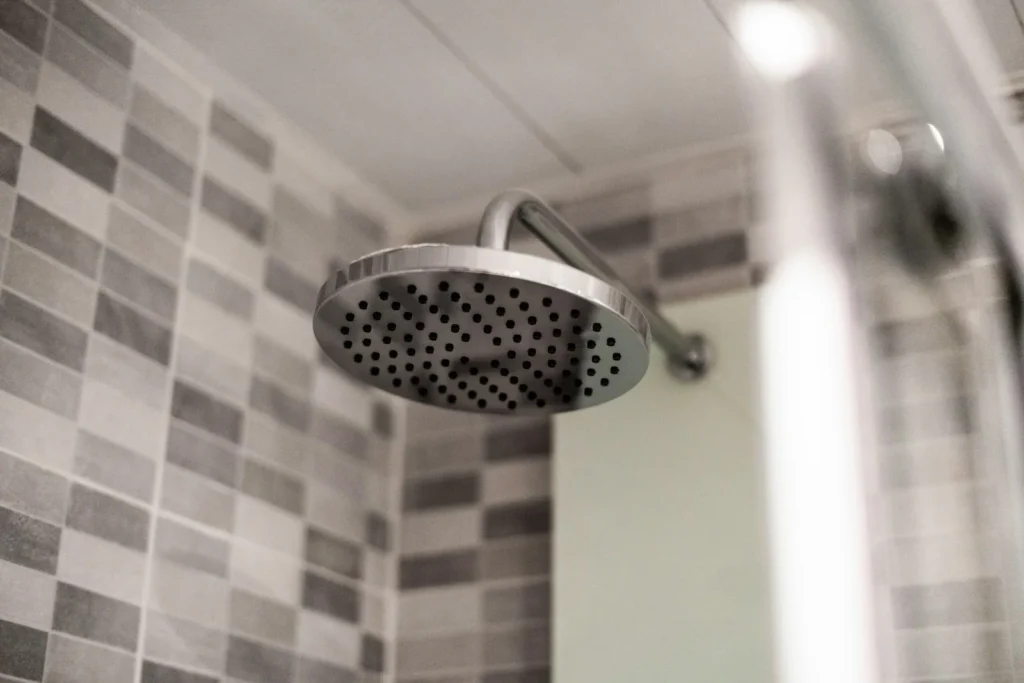
Mineral scale builds in the spray holes and in the screen behind the head. Because it accumulates over months, people adjust to the declining flow without noticing — and then find it startling when a clean head is fitted.
Unscrew the head and run the arm briefly with a bucket underneath. If flow from the bare arm is strong, the head was the restriction.
Soak it in vinegar, clear the holes, rinse the inlet screen. On hard water this is maintenance rather than a one-off repair — hard water and what it does to plumbing covers why it recurs.
Two other things live in the same place. Many heads contain a removable flow restrictor, and if the head was recently replaced, the new one may simply deliver less than the old one did. And a filter screen at the inlet can trap debris after work on the water system.
Then the Valve Behind the Wall
If the bare shower arm also runs weakly, the restriction is upstream of the head, and the mixing valve is the usual candidate.
Most showers fitted in recent decades use a pressure-balancing valve. Inside it is a spool or piston that moves to keep hot and cold in proportion, so your shower doesn’t scald you when someone flushes a toilet.
That spool is a moving part in mineral-bearing water. When it scales up, it sticks or moves sluggishly, and a valve that can’t balance properly throttles flow. A worn or scaled cartridge does the same.
The signs that point here rather than at the head: flow is weak from the bare arm, the problem arrived alongside temperature swings, or the handle’s useful range has shifted so you now turn it much further for the same result.
Cartridge replacement is within reach for some homeowners, but be realistic. Cartridges are model-specific, they seize in place after years, and the water for that valve often shuts off only at the main. If the valve body itself has to come out, that means opening the wall.
Other Causes Worth Knowing
A tub spout diverter that isn’t fully diverting. On a tub-shower, water escaping from the spout while the shower runs means the diverter is worn. The tell is obvious once you look for it: water dribbling from the spout during a shower.
Partly closed valves. Some showers have service stops behind an access panel. If anyone has worked on the shower, one may have been left partly closed.
Galvanized pipe. In older homes, galvanized steel corrodes inward over decades and narrows the bore. It affects hot more than cold, gets gradually worse, and no amount of cleaning the head helps. How to tell what your pipes are made of covers identifying it.
Debris after work on the system. A main break, meter change or repair can loosen sediment that lodges in the first narrow point it reaches.
What the Timing Tells You
Gradual decline over months or years suggests scale in the head or valve, or corrosion in old pipe.
A sudden drop suggests debris, a valve knocked partly closed, or a failed component. Sudden changes are also worth taking more seriously, particularly if they coincide with anything else unusual.
And if reduced flow arrives with damp patches, staining on a ceiling below, or the sound of running water when nothing is on, treat that as a possible leak rather than a pressure problem — how to tell if you have a hidden water leak covers the signs.
When to Bring Someone In
Worth calling when cleaning or replacing the head made no difference, when the valve cartridge needs replacing and access is awkward, when pressure dropped suddenly with no obvious cause, when the house has galvanized pipe, or when weak flow comes with temperature swings.
Plumbing repair covers valve and fixture work of this kind.
If cleaning the showerhead changed nothing and the valve is the next step, call (877) 563-1074 to connect with an independent plumbing service provider serving Houston.
Frequently Asked Questions
Why is only my shower affected and not the sinks?
Because a shower has components no sink has: a showerhead with small spray holes that scale up, and a pressure-balancing valve with a moving part inside it. Both restrict flow as they age. Sinks have simpler valves and larger openings, so they keep working while the shower declines. A problem affecting only one fixture almost always lives at that fixture.
Will a new showerhead fix low pressure?
If the old head was scaled or blocked, yes — and cleaning it may do the same for nothing. If flow from the bare shower arm is also weak, a new head won’t help, because the restriction is behind the wall. Test the arm before buying anything. Note too that a head advertising higher flow cannot deliver more than the valve supplies.
Can I remove the flow restrictor from my showerhead?
Many heads have one, and it is usually removable. Worth knowing first that it exists partly to meet water-efficiency requirements, so removing it increases water and water-heating use, and it may affect the product’s warranty. It also won’t help if the real restriction is scale or a failing valve — clean the head and test the bare arm before assuming the restrictor is the problem.