How to Tell If You Have a Hidden Water Leak
A hidden leak shows itself indirectly: a bill that climbed, a floor that never dries, a smell that keeps returning. What to check before anyone opens a wall.
Most water leaks announce themselves. A hidden leak does not. It runs inside a wall, under a floor or beneath the foundation, and the first sign is usually indirect: a bill that climbed, a patch of floor that never dries, a smell that comes back a week after you cleaned.
The good news is that you can get a long way towards an answer without any equipment at all. Here is what to look for and what to check before anyone opens anything up.
What counts as a hidden water leak?
A hidden leak is simply one where you cannot see the source. The water is escaping somewhere you have no line of sight to, so what you notice is the effect rather than the cause.
That matters because water does not stay where it starts. It follows the path of least resistance, travels along a pipe trench or a joist, and surfaces wherever it finds a gap. A damp patch in one room can easily be fed by a break two rooms away, which is why guessing at which wall to open is an expensive way to start.
Common signs of a hidden leak
- A water bill that rose with no change in how much water you use.
- Flooring that is cupping, lifting, staining or feels soft in one area.
- A warm patch on a floor that should be the same temperature as the rest of the room.
- Paint or wallpaper bubbling, or a ceiling stain that is slowly getting bigger.
- A musty smell in one room that returns after cleaning.
- Pressure at every tap slowly getting weaker over months, instead of dropping all at once.
- The sound of running water when every fixture is off.
- Ground outside that stays soft, or grass along one line that stays green when the rest does not.
One of these on its own may be nothing. Two or three together are worth acting on.
Check your water meter
This is the single most useful test available to a homeowner, and it takes about ten minutes.
- Turn off every fixture and appliance that uses water. Include the dishwasher, the washing machine, the ice maker and the irrigation system.
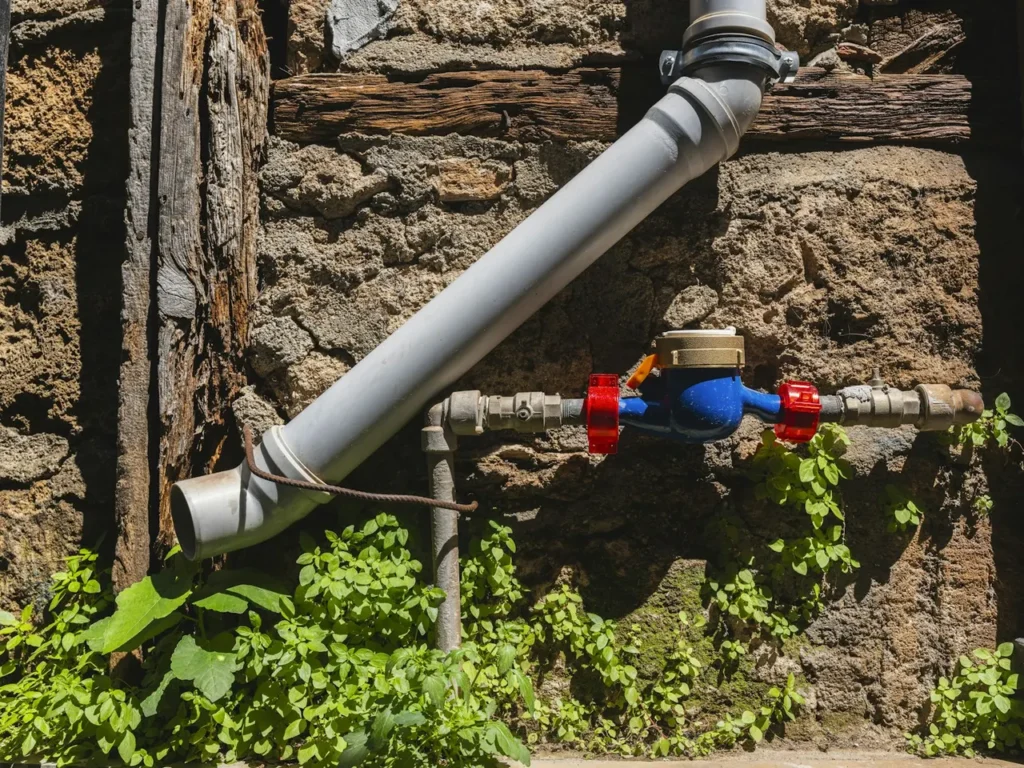
- Find the meter, usually in a box near the street, and look at the leak indicator. It is often a small triangle or a dial that turns whenever water is moving.
- Watch it for a few minutes. If it is turning with everything off, water is going somewhere.
- Note whether it moves quickly or barely creeps, and mention that when you request service. It is a useful clue about the size of the leak.
- If it is completely still but you still have damp somewhere, the problem is more likely a drain line or a fixture seal than a pressurised supply pipe.
Before you assume the worst, rule out the obvious offenders. A toilet flapper that is passing water will move a meter all on its own. Add a few drops of food coloring to the tank, wait about fifteen minutes without flushing, then look for that color appearing in the bowl. If it shows up there, the flapper is letting water past. An irrigation valve that is not seating properly does the same thing, so close the system valve and repeat the meter check.
Look for moisture and water damage
Go around with your hands rather than just your eyes. Open the cabinets under every sink and feel the back corners, not just the front, because a slow drip at a supply connection runs backwards along the pipe before it pools. Check the floor around the base of the water heater and look in the pan underneath it.
Look at the bottom of skirting boards for a tide line, and at the grout between floor tiles for one area that looks darker than the rest. Outside, look at each hose bib for a slow weep, and at the earth below it for a patch that never quite dries out even when there has been no rain.
Listen for unexplained water sounds
Pick a quiet moment, turn everything off, and stand still in a few rooms. A pressurised leak often makes a faint continuous hiss or a running sound with no obvious source. Putting an ear against a wall or a floor sometimes makes it clearer.
If you can hear water and the meter agrees with you, that is a strong pair of signals.
Where hidden plumbing leaks can occur
- Inside walls, at a joint or a section of supply pipe.
- Above ceilings, where a bathroom or a laundry sits on an upper floor.
- Under the concrete slab, on either a supply line or a drain line.
- In an attic run, which is both cold in winter and a long way from anyone noticing.
- In the yard, between the meter and the house.
- Behind or beneath a fixture, where a seal has failed rather than a pipe.
Water heaters deserve their own mention. A tank that is weeping from the base or a fitting can look like a floor leak for weeks before anyone connects the two, so it is worth ruling the unit in or out early. Our water heater services page covers what that usually involves.
Could the leak be under the slab?
It can be, and a lot of housing in this area is built on a concrete slab, though not all of it. Pier and beam construction is common in the older inner neighborhoods, and a leak under a raised floor is a different job with different access.
The signs that point under a slab are fairly specific: a warm spot on the floor, which usually means the hot water line; damp flooring with nothing above it that could have caused it; the sound of running water with everything off; and a meter that keeps moving after you have ruled out toilets and irrigation. If several of those line up, slab leak detection explains what happens next.
When simple checks aren’t enough
The homeowner checks above answer one question well: is water escaping, and roughly how fast. They do not answer the question that actually costs money, which is where.
Once the meter says something is running and the visible suspects are ruled out, locating the leak is a job for someone with equipment. That is the point at which professional leak detection earns its cost, because the alternative is opening walls or floors on a guess. The water leak guide covers the wider picture, including what causes leaks to develop and what repair typically involves.
What happens during leak detection
Approaches differ between providers, so treat this as what the work may involve rather than a fixed procedure. Ask before anything starts how the location will be confirmed, what will be opened, and what the plan is if the leak turns out not to be where it was expected.
- Confirming at the meter that water is genuinely moving.
- Isolating the hot and cold sides so the loss can be attributed to one of them.
- A pressure test on the section under suspicion, to see whether it holds.
- Acoustic listening equipment, which picks up the sound of water escaping behind a surface.
- Thermal imaging, which can show a warm line under a floor where a hot water leak is running.
- A camera on the drain side, where the suspected leak is a drain rather than a supply line.
Locating and repairing are separate steps. Once the position is known, the repair options depend on what the pipe is, where it runs and what has to be opened to reach it. Water leak repair covers that side of the work.
Frequently asked questions
How can I tell if I have a water leak?
Shut off every water using fixture and appliance, then watch the water meter for several minutes. Movement with everything off means water is escaping on the supply side. If the meter is completely still but you have damp flooring or a ceiling stain, suspect a drain line or a failed fixture seal instead.
Can a water meter detect a leak?
It detects that water is moving, which is not quite the same thing. A moving meter with everything off tells you something on the pressurised side is losing water. It cannot tell you where, and it will not register a drain line leak at all, because that water already passed the meter before it escaped.
How do I know if a leak is under my slab?
You usually cannot confirm it yourself. The combination that points that way is a moving meter, damp or warm flooring with no source above it, and the sound of running water with the house quiet. Confirming it is a job for someone with locating equipment, and it is worth doing before anyone opens concrete.
Can a hidden leak cause a high water bill?
Yes, and it is one of the more common first signs. A slow leak may not move the bill much at first, and the bill arrives weeks after the leak started, so a normal bill is not evidence that nothing is wrong. Watching the meter tells you in ten minutes what a billing cycle takes weeks to reveal.
If the meter is still moving with everything shut off, call (877) 563-1074 to connect with an independent plumbing service provider serving Houston.