Why Does My Hot Water Look Rusty or Discolored?
Discoloured water is alarming out of proportion to how serious it usually is, and the colour itself tells you a good deal about where it is coming from.
Discolored water is alarming out of proportion to how serious it usually is, and the color itself is informative. Rust colored, cloudy white and tea colored water each point somewhere different, and so does whether it appears in the hot water alone.
Narrow it down first
Two checks take a minute and rule out most of the possibilities.
Hot, cold or both? Fill a clear glass from the cold faucet and another from the hot. Discoloration in the hot only points at the water heater or the hot water pipework. Discoloration in both points at the supply coming into the house, or at the service line.
One fixture or all of them? Check a faucet at the other end of the house. A single affected fixture usually means a local pipe or a fitting rather than anything systemic.
It is also worth noting whether it is constant or only appears after the water has been off for a while, because standing water picks up far more than moving water does.
Brown, red or orange water
This is iron, and in household plumbing it almost always means rust. The question is where the rust is coming from.
In the hot water only, and worst first thing. Suspect the water heater. A steel tank is protected by a glass lining and a sacrificial anode rod, and once that protection is exhausted, the steel begins to corrode. Rust particles settle in the tank and get stirred into the water, which is why the first draw of the morning is usually the worst and it clears as fresh water comes through.
In hot and cold together, across the whole house. Look outside the property. Work on the water main, a break in the area, or hydrant flushing all stir up sediment that has been lying in the pipes, and the result is temporary discoloration that clears within hours.
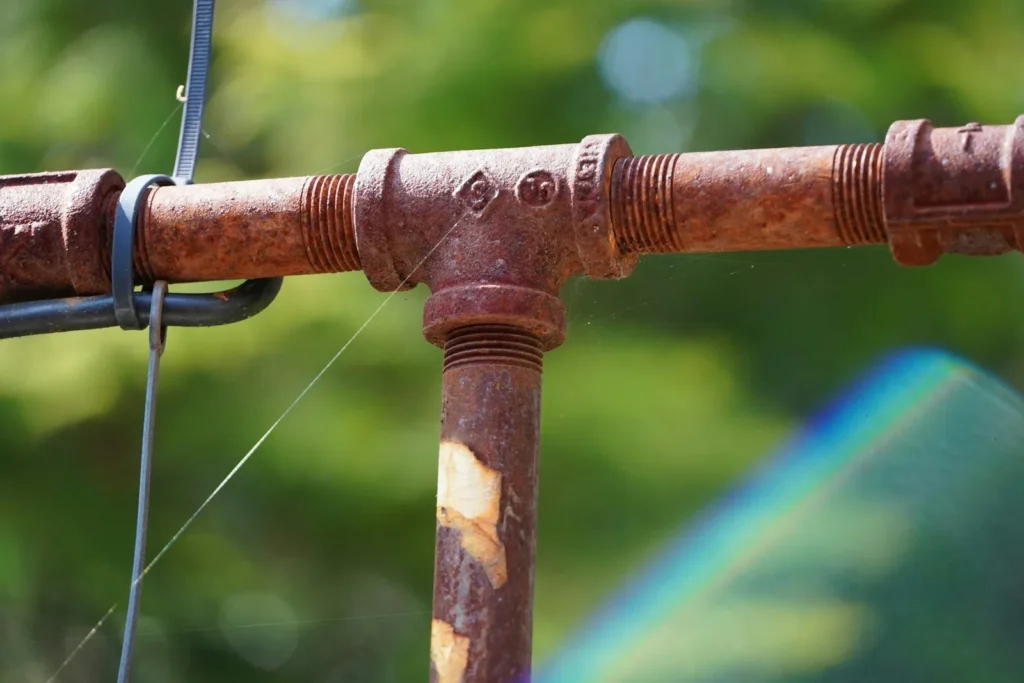
At one fixture, or worst after standing. Consider the pipework serving it. Older galvanised steel pipe corrodes internally over decades, and water sitting in it overnight comes out colored while water drawn later runs clear.
Cloudy or milky white water
This one is usually nothing at all, and there is a simple way to confirm it.
Fill a clear glass and set it on the counter. If the cloudiness clears from the bottom upwards over a minute or two, it was air. Tiny bubbles suspended in the water make it look milky, and they rise and escape once it is standing still.
Air in the water is common after work on the plumbing or the main, and it is more noticeable in hot water because dissolved gases come out of solution as water is heated. It is harmless.
If the cloudiness does not clear, or settles as a deposit at the bottom of the glass instead, that is particulate rather than air and is worth looking into.
Yellow or tea colored water
A light yellow or brownish tint without obvious particles is more often to do with the supply than the plumbing, and can relate to naturally occurring minerals or organic matter in the source water.
If it affects hot and cold equally, and neighbors have noticed the same, it is a question for your water provider rather than for the heater.
Black specks or dark flecks
Small dark particles, particularly in hot water, are often pieces of a deteriorating rubber component. Supply hose linings and older gaskets break down over time and shed fragments into the flow.
Dark gray or sludgy particles can also be mineral sediment from the bottom of a tank, stirred up during heavy use.
Either way, catching some in a coffee filter or a paper towel gives whoever attends something concrete to look at, which is more useful than a description.
Is it safe to use?
Questions about whether water is safe to drink are properly answered by whoever supplies it, not by a website. If discoloration is new, widespread, or accompanied by any notice from your provider, contact them. On a private well, testing is the route, and a local health department can normally explain how.
In the meantime, discolored water will stain laundry, so it is worth holding off on a white wash until it runs clear.
Hot water is not intended for drinking or cooking in any case, because it has been sitting in a tank and can pick up more from the plumbing than cold water does.
What to do
Run the cold water for several minutes. If it clears, the cause was probably disturbed sediment in the supply and it will settle on its own.
Check with neighbors. If they have it too, it is not your plumbing.
Note the pattern. Hot or cold, one fixture or all, constant or only after standing, and whether it clears as the water runs. That is most of a diagnosis.
Keep a sample. A sealed jar of the water at its worst is genuinely useful, because discoloration has a habit of clearing before anyone arrives.
When rusty hot water matters
Persistent rust in hot water only, in a heater of some age, is worth treating as information about the tank. It suggests the internal protection is no longer doing its job and the steel is corroding.
That does not mean the tank is about to fail tomorrow, and it is not a reason to panic. It does mean the unit has moved into the part of its life where keeping an eye on it is sensible. Our article on how long a water heater usually lasts covers how to establish the age, and a heater leaking from the bottom covers what corrosion eventually produces.
If the water smells as well as looks wrong, that is a related but separate matter, and hot water that smells bad goes through it.
When to bring someone in
Reasonable triggers are discoloration that does not clear after running the water, rust in the hot water that keeps returning, particles that block aerators or appliance filters, discoloration alongside a drop in pressure, or an older heater showing rust together with other symptoms.
See water heater repair, or water heater replacement where the tank has reached the end of its life.
Frequently asked questions
Why is my hot water rusty but my cold water clear?
Because the rust is forming somewhere only the hot water passes through. In practice that usually means the inside of the tank, where the internal protection has been used up and the steel is corroding.
Why does my water look cloudy then clear up?
That is air. Tiny bubbles make water look milky and then rise out of it, so the glass clears from the bottom upwards. It is harmless and common after work on the plumbing or the main.
Will flushing the water heater clear rusty water?
It can help if loose sediment is the issue. If the tank itself is corroding, flushing removes what has come off so far but does not stop the process, so the discoloration tends to return.
For plumbing service in Houston, call (877) 563-1074 to connect with an independent plumbing service provider.