Why Does My Shower Faucet Keep Dripping?
A dripping shower is more annoying than a dripping sink and harder to ignore, because the sound carries and the drip lands on a surface that stains. It’s also a different repair from a sink faucet, because almost all the working parts are inside the wall.
Where Is It Dripping From?
Two possibilities, and they mean different things.
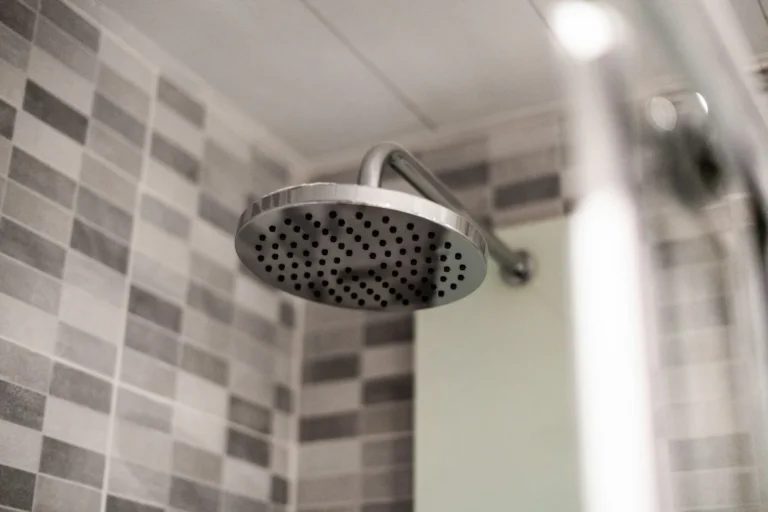
From the showerhead. Expect some drips for a minute or two after shutting off — that’s water draining out of the head and the arm, and it’s normal. What isn’t normal is a drip continuing for hours. That means the valve isn’t closing fully.
From the tub spout. On a tub-shower, a spout that drips continuously points at the same valve, since it feeds both outlets. A spout that dribbles while the shower is running is a different fault — that’s the diverter failing to send all the water upward.
Worth separating from a dripping sink faucet, which has its own causes — why a faucet drips after it is turned off covers those.
The Cartridge Is Usually the Answer
Most shower valves fitted in recent decades are single-handle pressure-balancing units, and inside sits a cartridge doing all the sealing and mixing.
Its rubber seals harden and compress with age, and mineral scale builds on the sealing surfaces. Either way the cartridge stops closing completely, and a small amount of water keeps getting past.
Heat accelerates this, which is why the hot side usually fails first. On a two-handle shower, that shows as a drip that stops when you shut the hot side off firmly — useful, because it identifies which side needs work.
On older two-handle valves the equivalent parts are rubber washers and the seats they close against, and the seat is as likely to be the problem as the washer. A pitted seat will chew through a new washer quickly.
Scale returning fast points at water hardness rather than the part — hard water and what it does to plumbing covers why the same components keep failing.
Why This Job Is Different From a Sink Faucet
Worth understanding before deciding whether to attempt it, because the differences are what catch people out.
There are usually no local shut-off valves. A sink has stops underneath. Most showers don’t, so the water goes off at the main for the whole house. Some have service stops behind an access panel or integrated into the valve, which is worth checking for first.
The valve is inside a wall. Everything is reached through the trim opening, working blind, at an awkward angle.
Cartridges seize. After years in mineral-bearing water, a cartridge can bond into the valve body. Pulling one out sometimes needs a puller tool, and forcing it can damage the valve body — which turns a cartridge swap into opening the wall.
Parts are model-specific. Manufacturers use many designs and cartridges are not interchangeable. Identifying the valve is the first real step, and it isn’t always obvious from the outside.
Know where your main shut-off is before starting — how to find your main water shut-off valve covers locating and testing it.
The Tub Spout Diverter
If water runs from the spout while the shower is on, this is a separate and much simpler problem.
The diverter is the lift-up knob on the spout, or a pull mechanism inside it. When its seal wears, some water keeps taking the easy route out of the spout instead of going up to the head. That also explains a shower that feels weak.
Most diverters aren’t serviceable, so the fix is replacing the spout — often straightforward, and it doesn’t involve the in-wall valve. Spouts attach either by a set screw underneath or by threading onto the pipe, and it’s worth identifying which before pulling on it.
Why Not to Leave It
A shower drip isn’t only wasted water. It runs continuously over the same spot, and constant moisture on tile or a tub surface encourages staining and mineral deposits that are difficult to remove later.
On the hot side, it’s water you paid to heat leaving continuously.
And a valve that no longer closes properly tends to keep degrading. Water passing a worn seal erodes the surfaces it flows over, so a cartridge job left long enough can become a valve job.
A drip that appeared alongside other fixtures failing early is worth a wider look — signs your water pressure is too high covers a cause that shortens the life of every seal in the house at once.
When to Call Rather Than Continue
Reasonable stopping points: you can’t identify the valve or find the right cartridge, the cartridge won’t come out, there’s no accessible shut-off for the shower, the drip continues after a new cartridge, the valve body is corroded, or there’s any sign of moisture in the wall or on the ceiling below.
That last one changes the priority. Water inside a wall cavity is a different problem from a drip you can see, and it’s worth having looked at promptly.
Plumbing repair covers shower valve work.
If the cartridge is seized, or you’re seeing signs of moisture in the wall, call (877) 563-1074 to connect with an independent plumbing service provider serving Houston.
Frequently Asked Questions
How long should a shower drip after I turn it off?
A minute or two is normal — that’s water left in the head and the arm draining out under gravity, and a head mounted at an angle holds more than one that points straight down. What isn’t normal is a drip still going an hour later. That means water is getting past the valve, not draining out of the pipe.
Can I turn the handle harder to stop the drip?
It sometimes works briefly and it makes things worse. Extra force compresses a worn seal against its seat, which accelerates wear on both and can damage the seat — and a damaged seat turns a cartridge replacement into a valve replacement. If the handle has to be forced to stop the water, the part has already failed.
Do I have to turn off water to the whole house?
Usually yes, unless the shower has service stops. Some pressure-balancing valves have integral stops reachable behind the trim plate, and some homes have an access panel behind the shower wall. Check both before assuming. If neither exists, the main shut-off is the only option — another reason to know where it is and that it works.