Why Is My Toilet Gurgling? Common Causes and What It Means
A gurgling toilet is the sound of air being pulled through standing water. The bowl is rarely the problem. The drain or the vent behind it usually is.
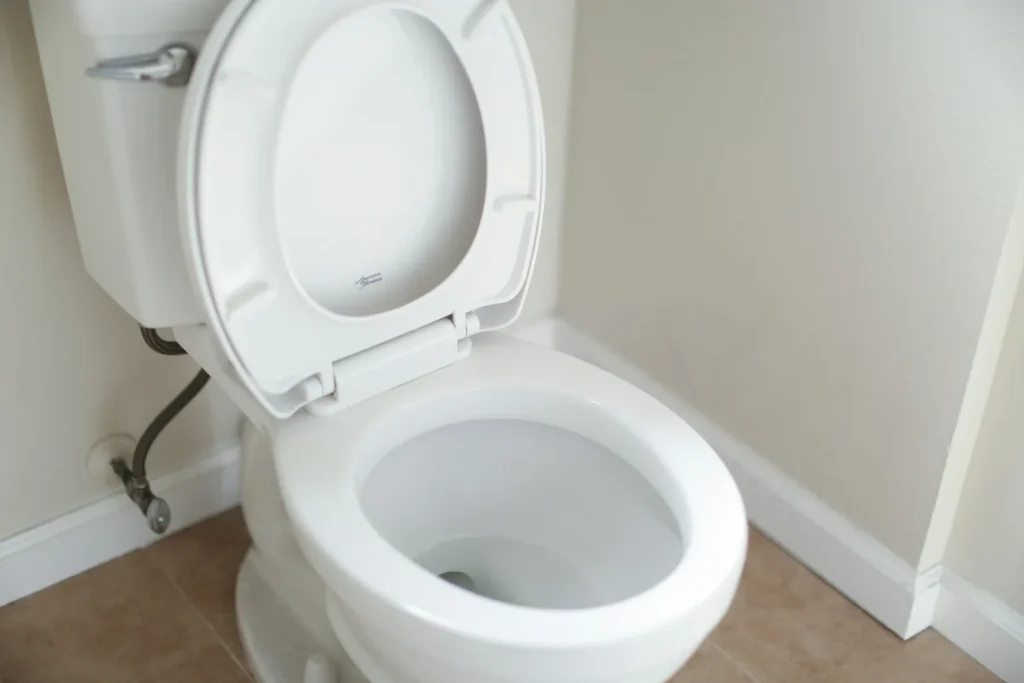
A toilet that gurgles is making a sound it was never designed to make. The bowl itself is rarely the thing at fault. What you are hearing is air being dragged through the water sitting in the trap, and that only happens when something has changed about how air and water move through the drain lines behind it.
What the gurgling sound actually is
Every toilet has a trap built into its base, the curved passage that holds a small amount of standing water. That water is a seal. It keeps sewer gas out of the bathroom, and it stays where it is as long as the pressure on both sides of it stays roughly equal.
Drains also need air. When water runs down a pipe it pushes air ahead of it and leaves a low pressure space behind it. A working system feeds air into that space through a vent, usually a pipe running up through the roof. When the vent does its job, you hear nothing.
When air cannot get in through the vent, the drain takes it from wherever it can. Often the easiest route is straight through the water sitting in a nearby trap. Air pulling through that water is the gurgle.
That narrows things down usefully. The sound points either to a restriction in the drain or a restriction in the vent, and occasionally to both.
A partial clog in the drain
A blockage that only partly fills the pipe still lets water past, so the toilet keeps flushing. What it does not let past freely is air. Water squeezing around the obstruction drags air through the trap behind it.
The tell here is usually a flush that looks slightly wrong. Slower than it used to be, or a bowl that rises further before it clears. A toilet that gurgles but flushes normally points more towards the vent.
A blocked or restricted vent
Vent openings sit on the roof, which means they collect whatever ends up there. Leaves, nesting material, or debris left behind after roof work can all narrow the opening.
A restricted vent tends to produce gurgling that moves around the house. Flush the toilet and a nearby sink or tub gurgles. Drain the tub and the toilet burbles. The fixtures are borrowing air from each other because the proper supply is choked.
A restriction further down the main line
If several fixtures gurgle, and particularly if the lowest fixtures in the house are worst affected, the restriction may be in the main drain rather than in any single branch. Everything upstream feeds into that line, so a partial blockage there shows up in several places at once.
Roots, a sagging section holding water, buildup along the pipe wall and displaced joints are all plausible causes. None of them can be identified by ear. Our guide to why drains keep clogging covers how a recurring blockage differs from a one off.
Something beyond your property
Occasionally the restriction sits past the property line. Work on the public main, or a sewer running full during heavy rain, can push air back up the system. Gurgling that begins at the same time as heavy rainfall, or that neighbors notice too, is worth mentioning when you ask for help.
Checks you can safely make
None of the following needs tools or opening anything up.
Work out which fixtures are affected. Run each one and listen. One fixture gurgling alone suggests a local problem. Several suggest a shared line or a vent.
Note when it happens. Only after a flush? After the washing machine drains? During rain? Timing is genuinely diagnostic, and it is the sort of detail that saves a round of questions later.
Watch the level in the bowl. Water that rises and falls on its own, or that settles lower than it used to, suggests the trap seal is being pulled.
Check whether drains are slowing. Gurgling together with slow drainage elsewhere is a stronger signal than gurgling on its own.
What not to do
Do not pour chemical drain cleaner down a gurgling toilet. Gurgling is an airflow symptom, and drain cleaner does nothing for airflow. If a partial clog further down is involved, the product tends to sit on top of it, which makes the next stage more unpleasant for whoever has to work on that line.
Do not climb onto the roof to look at a vent. Roof work carries a fall risk that is not worth taking for a diagnostic look.
Do not dismiss it if it is spreading. Gurgling that reaches more fixtures over days or weeks is describing a restriction that is growing.
When to bring in a plumbing professional
Reasonable triggers are more than one fixture gurgling, gurgling alongside slow drains, any sewage smell indoors, any backup at a lower fixture, or gurgling that returns after a drain has been cleared.
A single gurgling toilet, with everything draining normally and no smell, is lower priority. It is still telling you something has changed.
Where the main line is suspected, a sewer camera inspection can show what is actually inside the pipe rather than inferring it, and our article on when a camera inspection is worth arranging covers when that is justified. For drain work generally, see drain cleaning, and for problems traced to the line itself, sewer line repair.
Frequently asked questions
Is a gurgling toilet serious?
Not necessarily on its own, but it is never meaningless. It always indicates air moving through the system in a way it should not. One gurgling fixture with normal drainage is usually low urgency. Gurgling across several fixtures, or alongside slow drains or odor, deserves attention sooner.
Why does my toilet gurgle when the washing machine drains?
A washing machine discharges a large volume quickly. If the drain or vent is restricted, that surge pushes and pulls air through the system, and the toilet trap is often the easiest place for that air to move. It usually points to a shared branch or a vent restriction rather than a fault with either fixture.
Can a gurgling toilet fix itself?
The noise sometimes stops, but that is not the same as the cause resolving. Debris can shift and temporarily restore airflow while the restriction remains. If the gurgling comes back, treat the return as the useful information.
For plumbing service in Houston, call (877) 563-1074 to connect with an independent plumbing service provider.