Why Is My Faucet Dripping After It Is Turned Off?
A faucet is a valve, and a drip means the seal is no longer complete. Which part has given up depends on the type of faucet.
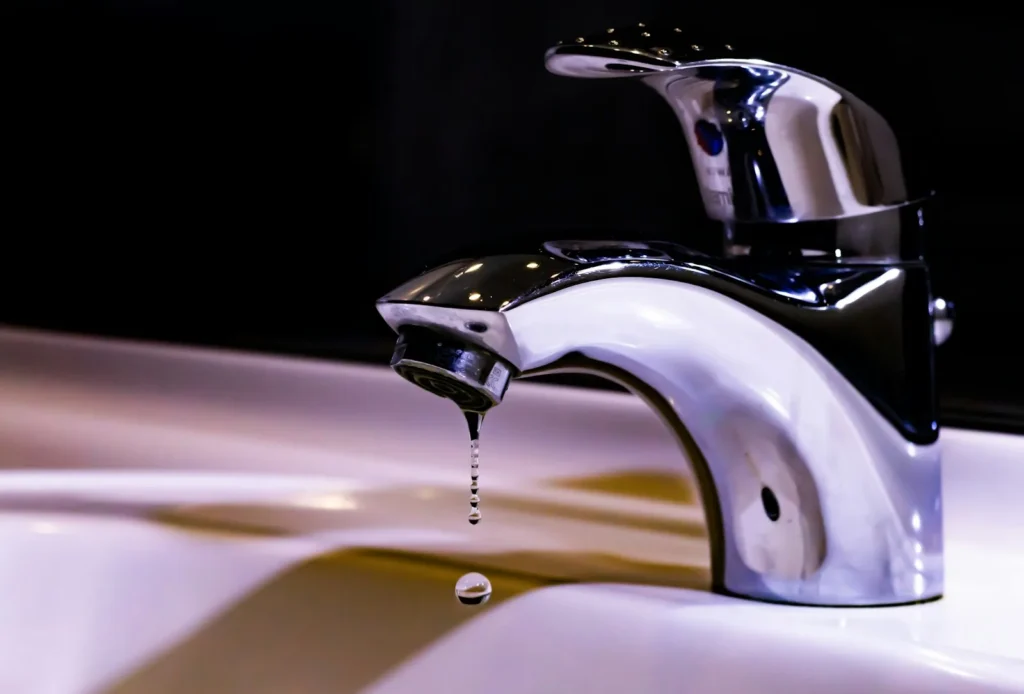
A faucet is a valve, and every valve works by pressing something soft against something hard. A drip means that seal is no longer complete. Which part has given up depends on the type of faucet, and that is worth establishing before buying anything.
A few drips after turning off are normal
Water left in the spout after the valve closes has to come out, so a handful of drops over the following seconds is simply drainage.
What matters is whether it stops. Drainage finishes within a few seconds and does not come back. A fault drips steadily, or starts again minutes later, and will still be dripping in an hour.
A pull down sprayer holds more water than a plain spout and takes a little longer to finish draining, which is worth allowing for before assuming a fault.
Work out what kind of faucet you have
The internals differ completely between types, and so does the cause of a drip.
Two handles, one hot and one cold, that turn several times. Almost certainly a compression faucet, the oldest design still in common use.
One handle that moves up and down and side to side. A cartridge, ball or ceramic disc faucet.
Two handles that turn only a quarter turn and stop. Usually ceramic disc cartridges.
Which handle you can stop the drip with also tells you something. On a two handle faucet, if closing the hot side firmly stops it, the fault is on the hot side, and only that side needs attention.
Compression faucets: the washer
A compression faucet closes by screwing a stem down so a rubber washer presses onto a seat. Rubber hardens, flattens and tears with use, and once it does it cannot seal.
This is the classic dripping faucet and the washer is an inexpensive part. It is also why the traditional response of turning the handle harder is counterproductive, since the extra force damages the washer and the seat faster.
The valve seat
The seat is the fixed surface the washer closes against. Mineral deposits build on it, and years of contact wear a groove or pit it.
A new washer on a damaged seat drips almost immediately, which is the usual explanation when someone has replaced the washer and the problem returns within weeks. Seats can sometimes be dressed flat with a tool made for the purpose, and on some faucets they are replaceable.
Cartridge, ball and ceramic disc faucets
Single handle faucets control both temperature and flow through one mechanism, and when they drip the cartridge or disc assembly is usually the reason.
Cartridges wear, and their seals harden. Ceramic discs are very durable but can be chipped by grit in the water, and once chipped they will not seal. Ball faucets have more small parts inside than the others and are usually rebuilt with a kit rather than repaired piecemeal.
Cartridges are generally specific to the manufacturer and often to the model, so the brand and model matter when buying one. A photograph of the faucet and of the old cartridge saves a second trip.
Dripping from the spout is not the same as leaking at the base
Water appearing around the base of the faucet, or under the sink, is a different fault with different causes, usually O rings or the supply connections rather than the valve.
It also matters more, because that water goes into the cabinet and the countertop rather than down the drain. Worth checking underneath while you are looking.
When pressure is the real cause
If faucets around the house start dripping within a short period, or newly fitted parts fail quickly, the issue may not be the faucets.
Supply pressure above what the system is designed for wears seals faster everywhere at once. Supporting signs are banging pipes, appliance valves failing repeatedly, and a water heater relief valve that discharges, which our article on a leaking relief valve covers.
That is worth knowing before replacing the same cartridge for the third time, because otherwise the replacement is treating a symptom.
Why a small drip is worth dealing with
A drip runs continuously, and unlike most plumbing faults it never gets dramatic enough to force the issue, so it tends to be tolerated for years.
Beyond the water itself, a constant drip stains the fixture, and a dripping hot-water faucet is also drawing hot water, so the tank reheats to replace it.
It is also a useful thing to rule out when water use has risen without explanation. Our article on spotting a hidden water leak covers the wider checks.
Before starting any repair
Close the shut off valves under the sink and open the faucet to confirm the water is genuinely off. Put a cloth in the sink so small parts cannot disappear down the drain, which happens more often than anyone admits.
Lay parts out in the order they came off and photograph each stage. Note the brand, since cartridges are rarely interchangeable between makes.
One thing worth knowing in advance is that shut off valves under sinks are often decades old and sometimes will not close, or start weeping once moved. That is the most common way a small job becomes a larger one.
When to ask for help
Reasonable triggers are a shut off valve that will not close or drips once moved, a drip that returns after new parts, several faucets failing around the same time, water appearing under the sink or at the base, corroded fittings that will not move, or a faucet old enough that parts are no longer available.
See faucet repair, or plumbing repair more generally.
Frequently asked questions
Why does my faucet drip only sometimes?
A partly worn seal can hold at some handle positions and not others, so how firmly it was last closed changes the result. Pressure in the supply also varies through the day, and a marginal seal may hold at lower pressure and pass at higher.
Will turning the handle harder stop the drip?
Briefly, and at a cost. Extra force crushes a worn washer and wears the seat it presses against, so the drip returns worse and the repair becomes larger. If a faucet needs forcing to stop, it needs a part.
Why does my faucet still drip after a new cartridge?
Usually because the sealing surface the cartridge meets is damaged or scaled, or because the cartridge is not quite the right part for that model. Persistently high supply pressure is the other common explanation, and it will keep shortening the life of whatever you fit.
For plumbing service in Houston, call (877) 563-1074 to connect with an independent plumbing service provider.