Why Does My Toilet Overflow When I Flush?
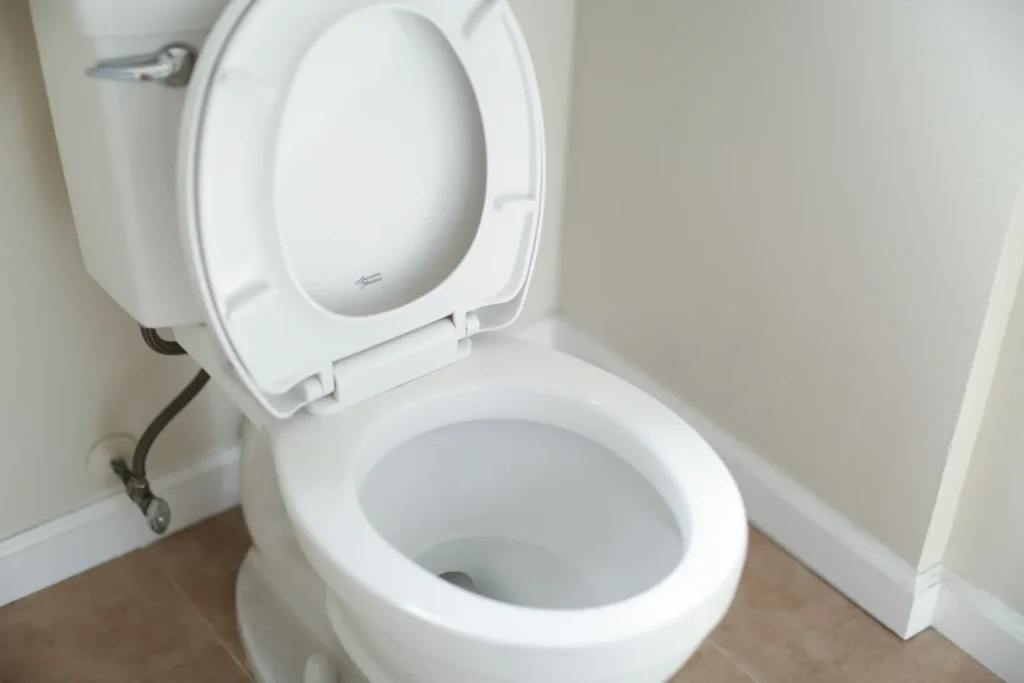
An overflowing toilet gives you about ten seconds to act before the problem becomes a floor problem. This covers those ten seconds first, then why it happened.
Stop the Water First
Do not flush again. The instinct is to flush a second time hoping it clears. A second flush sends another tank of water into a bowl that already can’t drain, and that is what turns a near miss into a flood.
Take the tank lid off and push the flapper down. The flapper is the rubber seal at the bottom of the tank. Pressing it closed stops water leaving the tank for the bowl immediately. Set the lid somewhere flat — they are heavy and they crack.
Then lift the float. With the flapper closed, holding the float up stops the tank refilling. Between those two actions the toilet is inert and you have time to think.
Or close the shut-off valve. It’s on the wall behind the toilet. Turn it clockwise. This is the cleaner solution if you can reach it quickly, but if it’s stiff or painted over, don’t spend the time fighting it — go into the tank instead.
Knowing where the shut-offs are before this happens is what makes it calm rather than frantic, and where to shut your water off covers locating them on an ordinary afternoon.
Treat the Water as Contaminated
Water from an overflowing toilet should be handled as contaminated, whatever it looks like. That applies especially when the overflow came up rather than over — water backing up from the drain has been somewhere else in the system first.
Wear gloves. Keep children and pets out of the room. Don’t use a household vacuum on it. Wash anything porous that got wet, or dispose of it. Ventilate, and disinfect hard surfaces afterward.
If water has reached a floor register, a wall cavity, or the ceiling below, that’s worth having assessed rather than dried and forgotten.
Why It Overflowed
Once the water has stopped, the useful question is whether this was the toilet or the drain behind it. The answer changes what happens next.
A clog in the toilet itself. The most common cause. Water rises, hesitates, then drains slowly away over a minute or two. Only this toilet is affected. Everything else in the house behaves normally.
A blockage further down the line. More serious, and it announces itself differently. Other fixtures gurgle when you flush. A tub or shower backs up. The lowest fixtures in the house are worst affected. Water may appear at a floor drain. Those signs mean the restriction is shared, not in the toilet, and our guide to telling when a sewer backup is starting covers that pattern properly.
A vent problem. Drains need air. When a vent is restricted, water struggles to move and the bowl can rise higher than it should before clearing. This usually comes with gurgling, and it’s why a gurgling toilet is worth paying attention to before it becomes an overflow.
A toilet that has always been marginal. Some low-flow designs clear reliably only when everything downstream is clean. If this toilet has overflowed repeatedly with different people using it, the fixture itself may be the limiting factor.
What Not to Do
Don’t reach for chemical drain cleaner. It performs poorly on the kind of blockage that stops a toilet, and it leaves a bowl of caustic liquid that the next person to work on the toilet has to deal with, whether that’s a plumber or you. It can also damage older pipe.
Don’t keep plunging a bowl that’s already full to the rim. Bail some water out into a bucket first. Plunging a full bowl mostly redistributes it onto the floor.
Don’t use a wire coat hanger. It scratches the glaze and rarely reaches anything. Damage to the porcelain is permanent and leads to staining afterward.
Don’t keep running other fixtures if you suspect the blockage is shared. Every sink and appliance feeds the same line.
Once the immediate situation is under control, how to unclog a toilet without making it worse covers clearing it properly.
When to Get Help Rather Than Keep Trying
Some of these are urgent and some just mean the DIY route has run out.
Stop and call when sewage is backing up at more than one fixture, when a floor drain is discharging, when the same toilet overflows repeatedly despite being cleared, when water has reached flooring, walls or a ceiling below, or when nothing you do restores normal drainage.
Multiple fixtures backing up at once is the one to treat as urgent rather than inconvenient. It points at the shared line, and continuing to use water in the house makes it worse. Emergency plumbing covers that situation, and drain cleaning covers the blockage itself.
If sewage is backing up at more than one fixture, call (877) 563-1074 to connect with an independent plumbing service provider serving Houston.
Frequently Asked Questions
Why does my toilet overflow when nothing is blocking it?
If the bowl rises and clears slowly but nothing is stuck in the trap, the restriction is usually further down the line or the vent isn’t letting air in properly. Both produce an overflow without an obvious object causing it. The giveaway is other fixtures reacting — gurgling, slow draining, or water appearing elsewhere when you flush.
Will the water stop on its own if I just wait?
Usually yes, because a tank holds a fixed amount and stops once it empties. That’s why closing the flapper and holding the float works. The situation where it does not stop is a backup from the main line, where water is arriving from elsewhere in the system rather than from this toilet’s tank — and that needs the water in the house shut off, not just the toilet.
Is it safe to keep using other bathrooms?
If only the one toilet is affected and everything else drains normally, yes. If more than one fixture is slow or backing up, treat the drainage system as shared and stop using water in the house until someone has looked at it. Every flush, shower and dishwasher cycle adds to a line that already can’t cope.