Who Owns the Water Line From the Street to Your House?
This question almost always arrives attached to a problem: a wet patch in the yard, a bill that jumped, or a plumber asking where the meter is before quoting. The answer decides who pays, so it’s worth getting right rather than assuming.
The Line Has Three Parts
Water reaches a house through what is really three separate pieces of infrastructure, and they don’t share an owner.
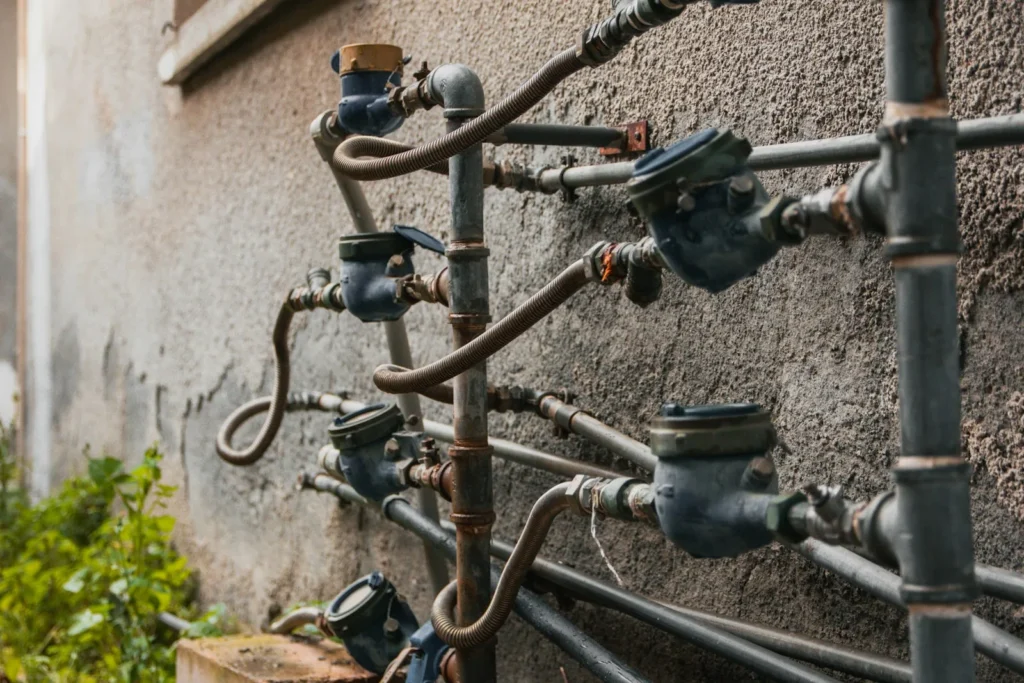
The water main runs under the street or alley and serves the whole block. The service line branches off that main and runs to your meter, usually near the property boundary. The customer line runs from the meter to the house and connects to everything inside.
Most confusion comes from treating this as one pipe. It isn’t, and the meter is usually the hinge point.
What Applies to City of Houston Water Customers
This section applies specifically to properties served by the City of Houston. Houston Public Works states the division directly:
The City owns the water service line from the main in the street to the water meter, typically in the property owner’s yard. The property owner owns the water service line from the water meter to where it enters the building and connects with the building’s internal plumbing.
For City of Houston customers, the City’s responsibility runs from the water main to the meter; the property owner’s responsibility begins at the meter and continues to the building.
One detail worth noticing in the City’s own wording: its portion is “typically in the property owner’s yard.” Being on your land does not make it your pipe.
Why This Is Not a Universal Rule
Many addresses in the Houston area are not City of Houston water customers, and for those properties the boundary above does not automatically apply.
Large parts of Harris County and the surrounding counties are served by municipal utility districts (MUDs), water control and improvement districts, or private water utilities. Those providers set their own rules, and the dividing line is not guaranteed to sit in the same place. Some draw it at the property line rather than at the meter.
Other situations complicate the ordinary rule too:
- Shared service lines between two or more properties
- Lines crossing an easement or a neighbor’s land
- Older subdivisions with incomplete or inconsistent records
- Condominiums, where an association may own pipework that looks private
- Townhouses, where the arrangement often depends on the recorded declaration rather than on what you can see
None of that is a reason to guess. It’s a reason to confirm before work starts.
What This Means When You Have a Leak
The sequence is the same whichever side it turns out to be.
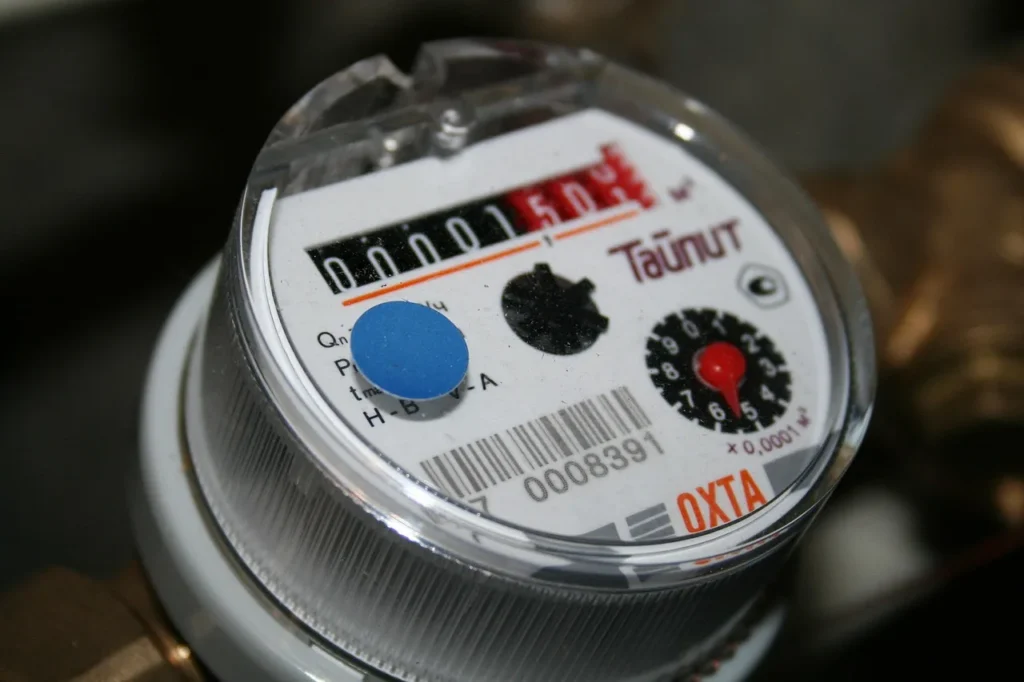
Establish that water is actually being lost. Shut off every fixture and appliance, including irrigation and the ice maker, then watch the meter’s leak indicator. Movement with everything off means water is escaping. Our guide to spotting a hidden water leak walks through the sequence and the false positives worth ruling out first.
Then work out which side of the meter. If the property has a shut-off valve where the supply enters the building, close it and watch the meter again. If the meter keeps moving with the house isolated, the loss sits between meter and building. If it stops, the loss is inside.
Report before you dig. If the evidence points to the provider’s side, report it to them rather than arranging a repair yourself. Work on their infrastructure is theirs to carry out.
Knowing where your shut-offs are before any of this happens makes it considerably easier, and where to shut your water off covers finding them on a dry afternoon.
Sewer Is a Separate Question
Don’t assume the water boundary tells you anything about the sewer boundary. They’re different systems with different rules, and responsibility for a sewer lateral is frequently drawn in a different place. If your problem is on the drainage side, sewer and drain services and signs a sewer line needs repair are the relevant starting points, and the responsibility question needs asking separately.
How to Confirm for Your Address
Call your water provider and ask where their responsibility ends for your specific service. City of Houston customers can reach the relevant teams through 311. Ask three things: where the boundary sits, what they will and will not repair, and how to report a suspected leak on their side.
A few minutes in advance is worth it. It’s a much worse conversation to have while standing in a wet yard.
Once you’ve confirmed the problem sits on your side of the meter, call (877) 563-1074 to connect with an independent plumbing service provider serving Houston.
Frequently Asked Questions
The leak is in my yard, so is it mine?
Not necessarily. For City of Houston customers, the City’s portion of the service line commonly runs through the property owner’s yard on its way to the meter, and the City’s own wording says so. Location on your land doesn’t determine ownership. Establish which side of the meter the loss is on, and confirm the boundary with whoever supplies your water.
Who pays for the water lost through a leak?
That depends on your provider’s policy rather than on plumbing. Some utilities operate adjustment or relief processes for high bills caused by a qualifying leak, often with conditions such as proof of repair. Ask your provider directly, because terms vary between providers and change over time.
How do I know whether I’m a City of Houston water customer?
Look at who bills you. The name on the water bill is your provider, and that’s who to ask about responsibility boundaries. Many Houston-area addresses are served by a municipal utility district or a private utility rather than by the City.
Source: Houston Public Works, FAQs and Additional Resources — “Who is responsible for the water service line on my property?”