What to Do When a Pipe Bursts in Your Houston Home
A burst pipe is one of the few plumbing problems where the first ten minutes change the outcome. What to shut off, in what order, and what to leave alone.
A burst pipe is one of the few plumbing problems where the first ten minutes genuinely change the outcome. The pipe itself is usually a straightforward repair. What costs money is the water that keeps running while nobody knows where the shut off is.
This page walks through what to do, in order, and what to leave alone. If water is running right now, start at the shut off and come back to the rest afterwards.
Act quickly when a pipe bursts
Water spreads faster than most people expect. It runs along joists, soaks into subfloor and wicks up the back of skirting and cabinets, which is why damage often shows up in a room away from the break. Every minute the line stays pressurised adds to that.
So the order matters. Stop the water, drop the pressure, get people and belongings clear, then worry about diagnosing anything.
Shut off the main water supply
If the break is at a single fixture, the fixture may have its own valve. Toilets have one on the wall behind them, and sinks usually have two under the basin. Turn it clockwise until it stops. If that holds the water back, the rest of the house keeps running normally.
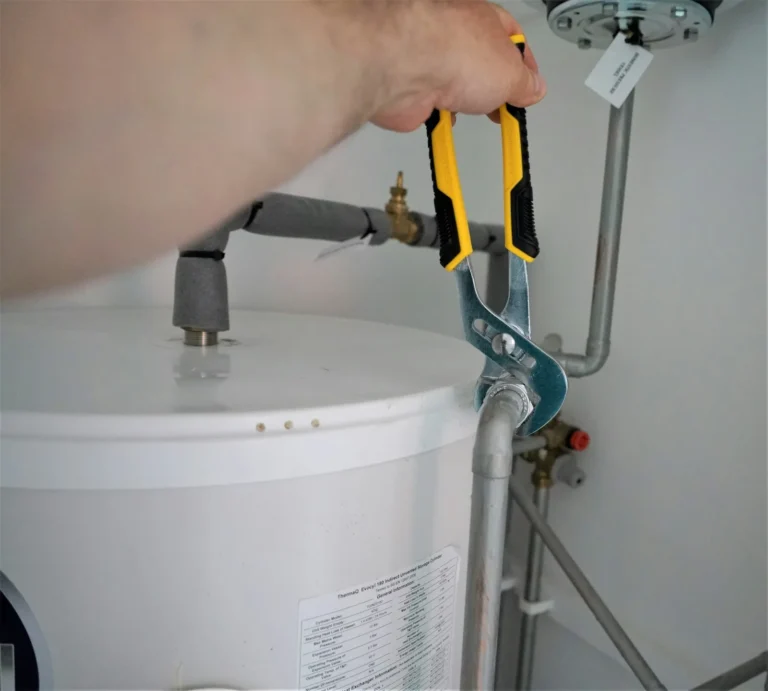
If the break is in a wall, in the attic or anywhere you cannot isolate, go to the main. On most properties in this area it sits in a meter box near the street, under a rectangular lid set into the grass. The valve is beside the meter and takes a meter key, though a wrench or a pair of pliers will usually turn it. A quarter turn, so the handle sits across the pipe rather than along it, shuts the house off.
Some homes also have a valve where the supply enters the building. If yours does and you can reach it faster, use that one.
Relieve pressure from the plumbing
Closing the valve stops new water arriving, but the pipes are still full and still under pressure. Open the lowest faucet in the house, and an outside hose bib if you have one, so the system drains down and stops pushing water out of the break.
Open a tap upstairs as well if you have one. Air entering at the top lets the lines empty properly rather than holding a column of water.
Protect your home from further water damage
- Lift rugs, boxes, and anything on the floor out of the wet area before it soaks through.
- Put foil or small blocks under furniture legs so they do not stain damp flooring.
- Move documents, electronics and anything you cannot replace to a dry room.
- Photograph and film the damage before you start clearing up. It costs nothing now and an insurer will usually ask for it later.
- Get air moving once the water is off, with windows open or fans running, as long as there is no electrical risk in the room.
If a ceiling is bulging and holding water, stay out from under it. That is weight, and it comes down without warning.
Be careful around electrical equipment
Water and electricity share a building more often than anyone would like. Keep out of standing water that is near outlets, extension cords, an electrical panel or an appliance that is still plugged in.
You can cut power to a flooded area at the breaker, but only if the panel is dry and you can reach it without standing in water. If either of those is not true, leave it alone, keep everyone out of the room, and let a professional handle it. No amount of saved flooring is worth the alternative.
What not to do after a pipe bursts
- Do not rely on tape or a repair clamp instead of closing the valve. They can slow a leak while you get to the shut off. They are not a fix.
- Do not turn the water back on to test whether it is still leaking. If you need to check, have someone watching the break when you do.
- Do not open walls or ceilings speculatively. Locating the break and opening the structure are two separate jobs, and guessing wrong adds a repair you did not need.
- Do not use a household vacuum on standing water unless it is rated as a wet vacuum.
- Do not ignore a small break because it looks manageable. Pressurised water widens a split.
When a burst pipe needs immediate plumbing help
Treat it as urgent if you cannot stop the water, if you cannot find the shut off, if the valve is seized, or if water is reaching an electrical panel, a ceiling or more than one room. The same goes if the house has no water at all once you have closed the valve, because that leaves you without a working supply.
Once the water is off and nothing is getting worse, the job usually moves from urgent to scheduled. That is worth knowing, because it changes what you are asking for. Our pages on burst pipe repair and emergency plumbing explain what each one involves, and general plumbing repair covers the fixture and valve work that often follows.
What information to have ready when requesting help
- Where the water is showing, and where you think it is coming from.
- What you have already shut off, and whether it held.
- How long the water ran before you stopped it.
- Whether the property is on a slab or has a crawl space.
- Whether the affected area has power on or off.
- Photographs, if you were able to take any safely.
When you are ready, you can send a plumbing service request with those details, and it goes to an independent plumbing provider working in your area.
How to reduce the risk of another burst pipe
Not every burst pipe is a weather event. Around here, lines fail for a handful of ordinary reasons, and a few of them are worth heading off.
- Older galvanised steel and corroded copper thin out from the inside and eventually give at the weakest point.
- Ground movement through dry and wet spells puts strain on buried lines.
- Pipework in an attic, a garage or an exterior wall is the least protected part of the system.
- Hard freezes are uncommon here, which is exactly why exposed lines and hose bibs often have no insulation on them at all. When a cold snap does arrive, those are the first to go, and the break usually shows during the thaw rather than during the freeze.
- A slow drip that has been ignored is often the same weak spot that later fails properly.
The single most useful thing you can do on an ordinary afternoon is find your main shut off, check that it actually turns, and keep a meter key somewhere you will remember. Everything above is easier when you already know where the valve is.
Frequently asked questions
What should I do first if a pipe bursts?
Shut the water off. Use the fixture valve if the break is at a fixture, otherwise close the main at the meter. Then open the lowest faucet in the house to drain the pressure out of the lines. Everything else, including working out what failed, comes after that.
Should I turn off the water if a pipe is leaking?
If water is escaping and you can reach the valve safely, yes. Shutting the water off costs you the use of the taps for a few hours. Leaving it on can cost you flooring, cabinets and drywall. If the leak is a slow drip into a bucket and nothing is soaking, you have more time, but it still needs looking at.
Can I repair a burst pipe myself?
Shutting the water off and draining the system is reasonable for most people. The repair itself depends on the pipe material, where the break is and what has to be opened to reach it, and plumbing work in Texas is regulated for good reason. A temporary clamp on an accessible pipe may reduce the flow, but it is a stopgap rather than a repair.
Is a burst pipe considered a plumbing emergency?
While water is escaping and you cannot stop it, yes. Once the supply is off and nothing is getting worse, the urgency usually drops, and the job becomes a repair that can be scheduled. The exception is when shutting off the break leaves the property with no usable water, which is its own problem.