Soggy Yard With No Rain: What It Can Mean
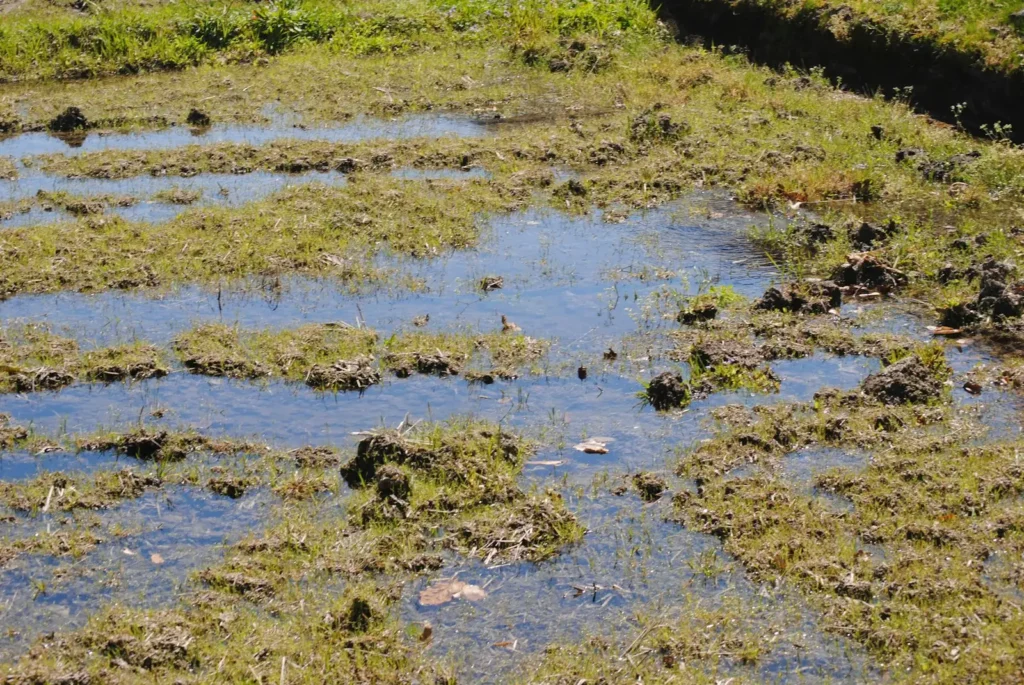
A patch of yard that stays wet when it hasn’t rained is one of those problems that could be trivial or expensive, and looking at it tells you very little. The useful work is narrowing down the cause before anyone puts a shovel in the ground.
Rule Out the Ordinary Explanations First
Plumbing is not the most common answer, and it’s worth eliminating the others.
Irrigation. A stuck valve, a cracked lateral, or a broken head will keep a specific area wet. The tell is location: near heads, near a valve box, or in one zone’s footprint.
Grading and drainage. Low spots collect water and hold it. If the patch is at the bottom of a slope, sits where two slopes meet, or is downhill from a downspout, drainage is the likelier answer. This kind of wetness usually appears after rain and simply takes a long time to clear.
Air conditioner condensate. A condensate line discharges a real volume of water on a humid day, and it drains somewhere.
A neighbor’s water. Runoff, irrigation overspray and downhill drainage all cross property lines.
Groundwater. After a wet stretch, a high water table keeps low ground saturated for days with nothing broken anywhere.
If one of those explains it, you’re done.
The Single Most Useful Test
If you have a water meter, it will answer the central question: is pressurized water being lost?
Shut off every water-using fixture and appliance in the house. Include the ice maker and the irrigation controller — both run on their own schedule and both will ruin the test. Then look at the meter’s leak indicator, the small dial or triangle that turns when water moves.
If it’s moving with everything off, water is escaping somewhere. If it’s completely still over several minutes, a pressurized supply leak is unlikely, and you should be looking harder at irrigation, drainage or sewer. Our guide to spotting a hidden water leak covers the full sequence and the false positives that catch people out.
Reading the Clues
Pointing toward a supply line leak: the water is clear and has no smell; the area stays wet regardless of weather or irrigation schedule; the meter moves with everything shut off; you’ve noticed pressure drop indoors; you can hear a faint hiss at an outdoor spigot or the meter box.
Pointing toward a sewer or drain problem: there’s an odor; the water is gray, dark or greasy; fixtures inside gurgle or drain slowly; the grass over one strip is noticeably greener or growing faster; the wet line runs toward the street or an alley in roughly the path a sewer lateral would take. If those fit, sewer and drain services and signs a sewer line needs repair are the relevant starting points.
Pointing toward irrigation: the patch appears or worsens only after a zone runs, and it sits near hardware.
These are indications, not proof. A wet yard is genuinely ambiguous, which is why locating equipment exists.
Which Side of the Meter?
If the evidence points to a supply leak, the next question decides who’s responsible for it.
Water reaching a house passes through the utility’s portion of the service line, then the meter, then the customer’s line. Where responsibility divides depends on who supplies your water, and it is not the same for every address in the Houston area. Our article on who owns the water line to your house works through it.
The practical point: if the wet area sits between the street and the meter, report it to your water provider before arranging anything yourself.
Before Anyone Digs
Two things matter here.
Call 811 first. It’s the national number for having buried utilities located, it’s free, and it exists precisely so people don’t hit a gas line looking for a water leak. Do this before any digging, including your own.
Don’t excavate to find the leak. Water travels along the path of least resistance underground, so the wettest spot on the surface is frequently not above the break. Digging based on where the grass is soggy is how a small repair turns into a trenched yard. Locating equipment finds the actual point, and water leak repair covers what that work involves.
Treat it as more urgent when the wet area is against the foundation, when it’s spreading, when water is surfacing under pressure, or when there’s sewage odor. Our water leak guide covers the wider picture.
If your meter is moving with everything shut off, call (877) 563-1074 to connect with an independent plumbing service provider serving Houston.
Frequently Asked Questions
Could this just be my sprinkler system?
Very possibly, and it’s worth ruling out first because it’s easy. Turn the irrigation controller off entirely for two or three days. If the area starts drying, you’ve found it. If it stays wet with the system off and the weather dry, look elsewhere. Note that irrigation faults will also move the water meter, so shut the controller off before running a meter test.
Does a soggy yard mean I have a slab leak?
Not by itself. A slab leak is under the foundation, and its usual signs are indoors: a warm spot on the floor, unexplained running water sounds, or a sudden jump in usage. A wet yard points outdoors first — the service line, irrigation, drainage or sewer. The two can look similar on a bill, which is why locating the source matters before assuming.
Will the water bill show it?
Usually, if it’s a pressurized supply leak, though there’s a lag before the reading catches up. A sewer or drain problem may not change the bill at all, because that water was already metered on its way into the house. So a normal bill doesn’t rule out a problem — it narrows which kind.